






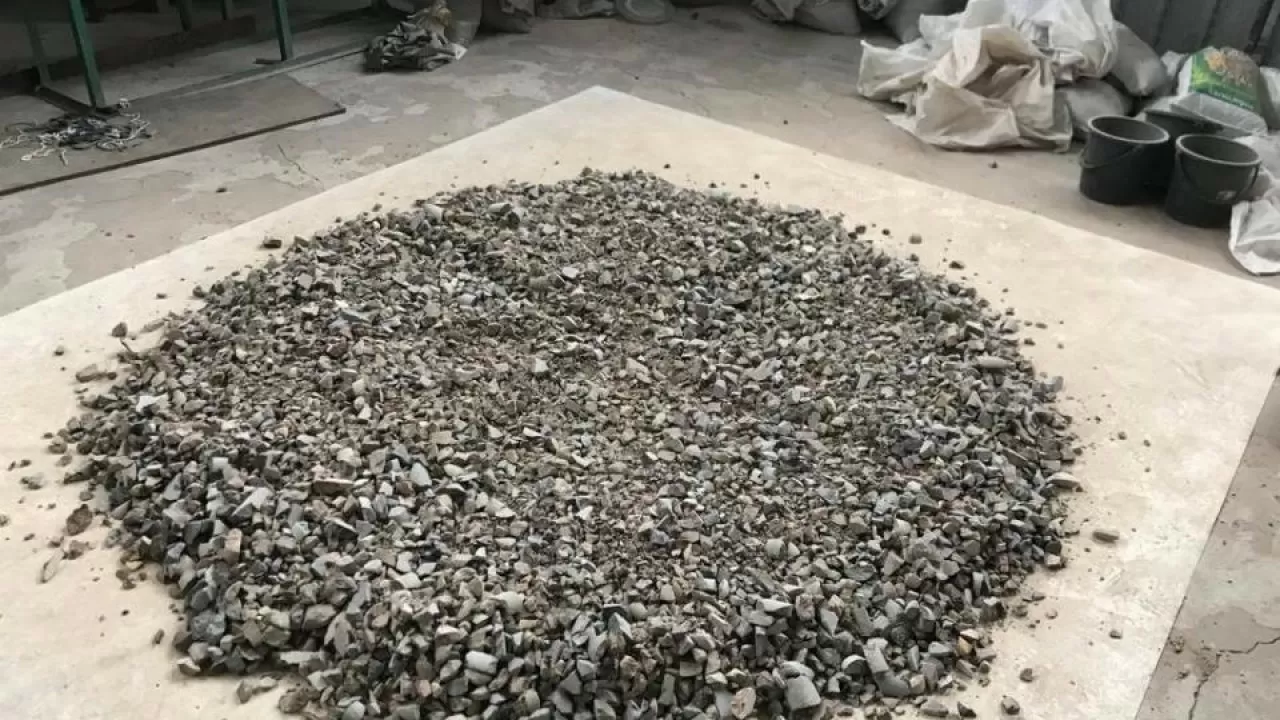
Kazakh scientists have developed a new technology designed to increase the efficiency of gold extraction from refractory ores while simultaneously reducing processing costs. The development has successfully passed laboratory testing and is being considered for future industrial implementation.
The project was carried out by specialists from the branch of the Republican State Enterprise “National Center for Complex Processing of Mineral Raw Materials of the Republic of Kazakhstan” under the State Research and Production Association of Industrial Ecology “Kazmechanobr,” led by PhD, Associate Professor and Deputy Director for Scientific Work, senior researcher of the Precious Metals Laboratory, Bauyrzhan Surimbaev, within the framework of grant funding AP19677446.
The development addresses one of the key challenges in modern gold mining — the depletion of high-grade deposits and the growing share of low-grade, complex ores. Traditional processing methods do not always ensure high metal recovery and often require expensive reagents and strict technological conditions.
Kazakh researchers proposed two innovative technological approaches, separately tailored for oxidized and sulfide gold-bearing ores.
For oxidized ores, a pre-treatment technology using hydrogen peroxide and/or sodium acetate prior to heap leaching has been developed. This approach increased gold recovery by up to 7%, and by 10–14% when the reagents were used in combination.
For sulfide ores, the scientists implemented a process involving the production of a rich gravity concentrate followed by intensive cyanidation. The use of sodium acetate further increased gold recovery by up to 4% and reduced the amount of precious metal remaining in processing tailings. In addition, sodium acetate is being considered as a promising partial alternative to expensive reagents, making the process more cost-effective.
According to the developers, the main value of the project lies in its comprehensive approach, which allows technological solutions to be adapted to different types of mineral raw materials and improves the overall depth of resource processing.
The high scientific level of the project is confirmed by international recognition. The research has resulted in six scientific publications, including two monographs and four articles in high-impact international journals indexed in Scopus and Web of Science (Q1 and Q2), such as Mineral Processing and Extractive Metallurgy Review (Taylor & Francis), Mining, Metallurgy & Exploration (Springer Nature), and Heliyon (Elsevier).
The project is also contributing to academic development, with one PhD candidate currently completing a dissertation on the topic.
In the future, the developers plan to move toward industrial-scale testing of the technology and continue searching for new reagent solutions to improve the processing of various types of gold ores.
This development opens new opportunities for deeper and more cost-effective processing of mineral resources, higher precious metal recovery, and the advancement of Kazakhstan’s mining and metallurgical science.


